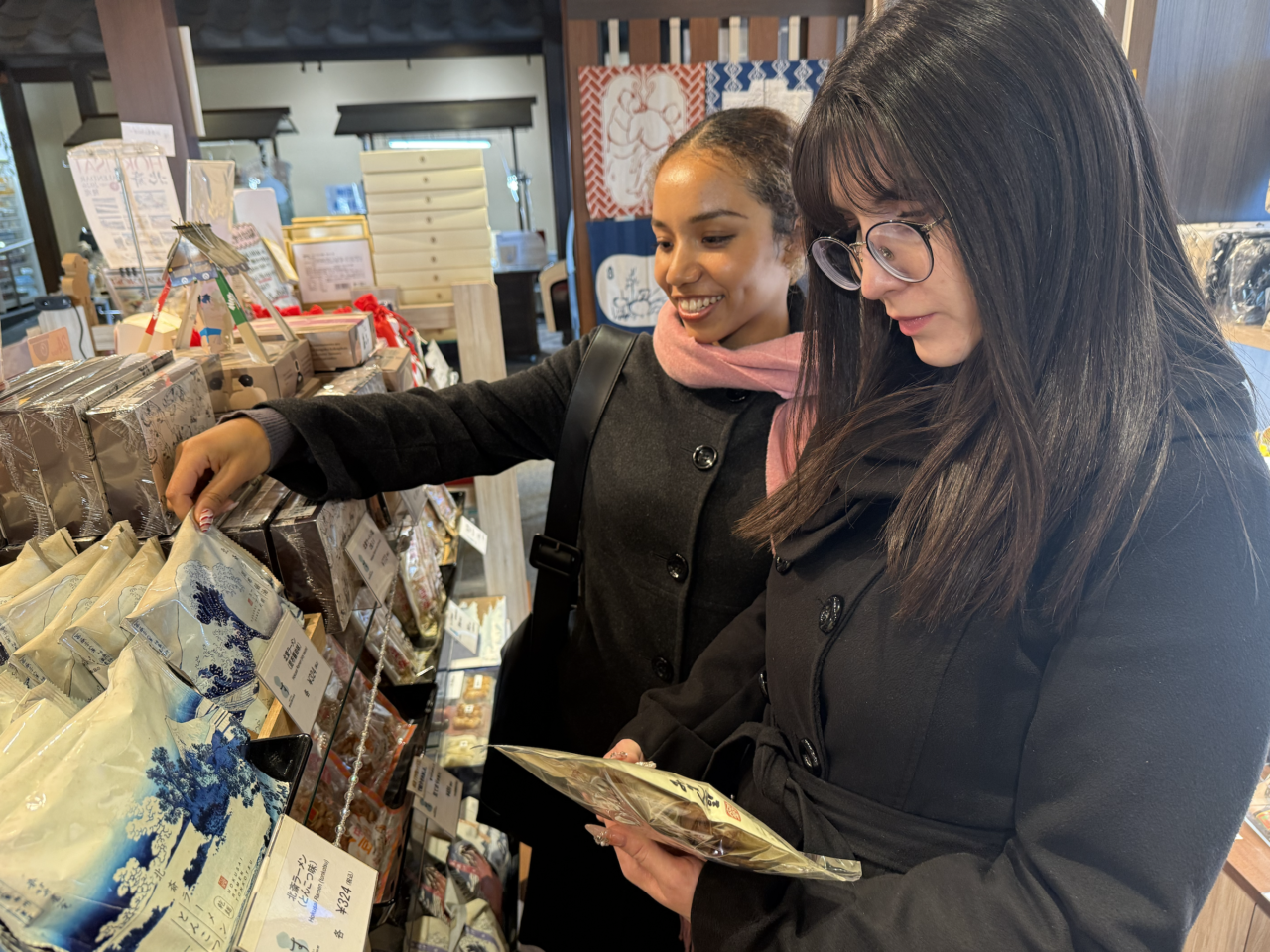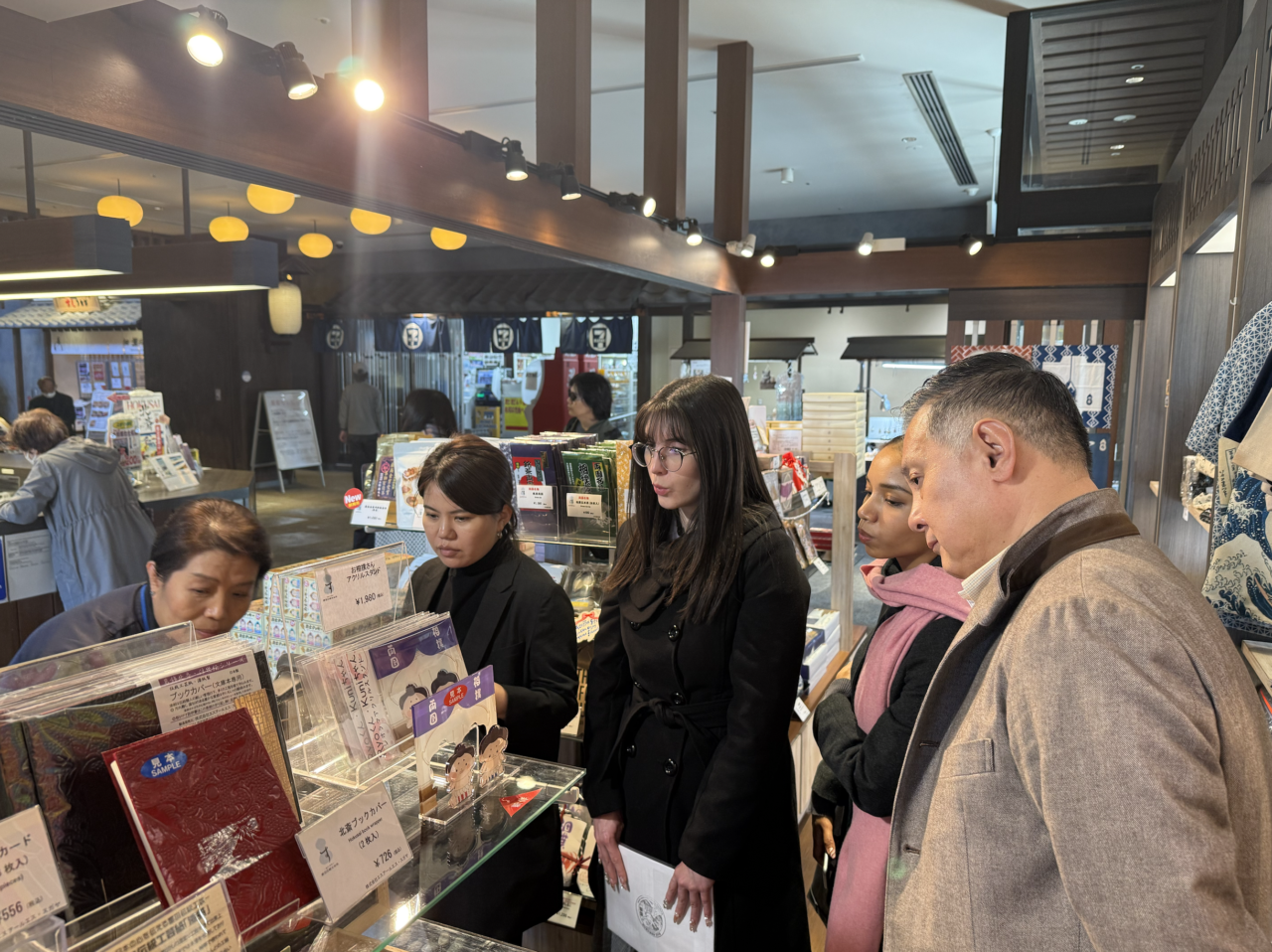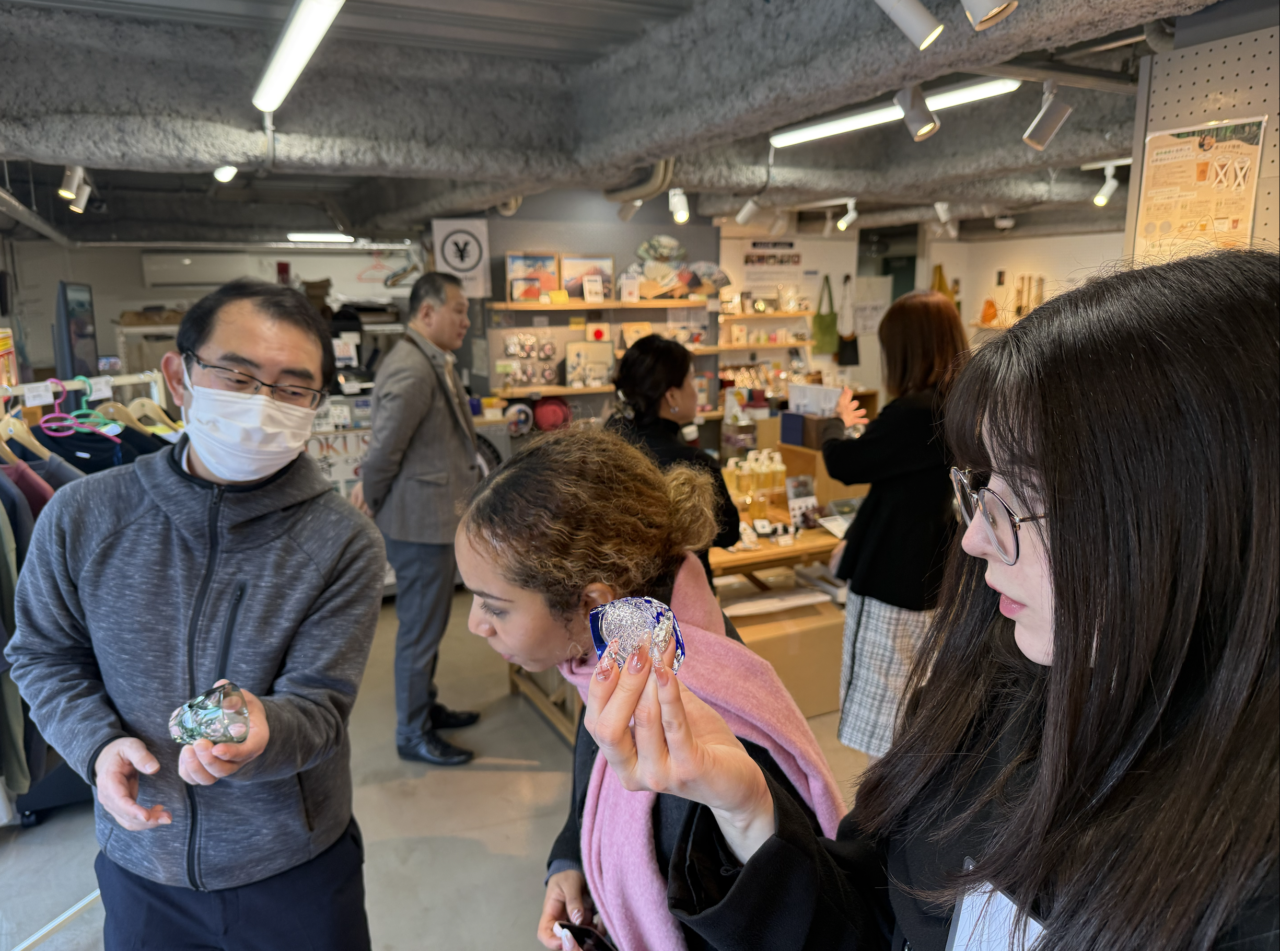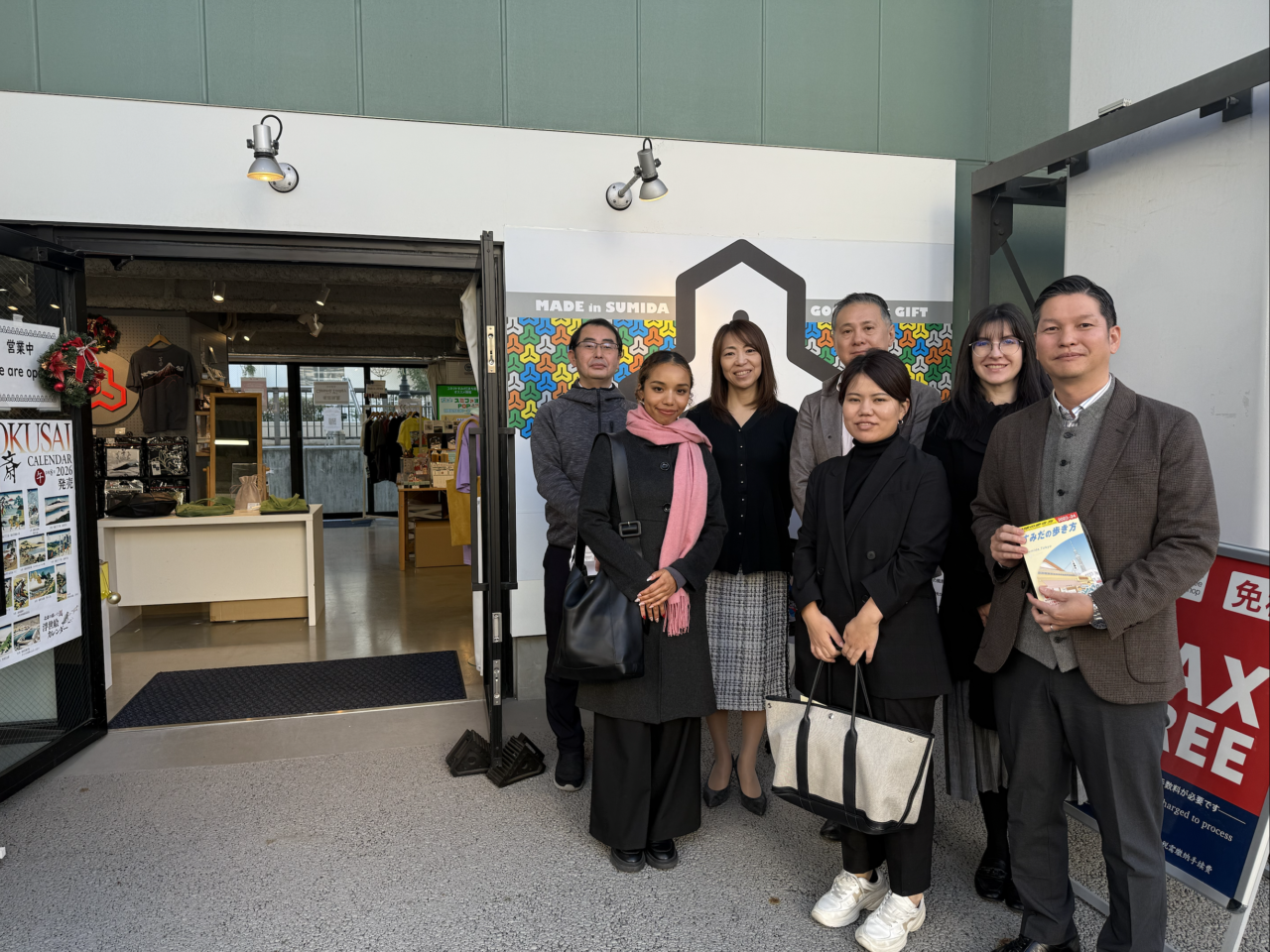
The Japan International Influencer Association (JIIA), in cooperation with the Sumida City Tourism Association, conducted a tour of the “Connect Sumida ‘Machidokoro’” facilitiy operated by the association, as well as the “Ryogoku Tourist Information Center” located within the “Ryogoku-Edo NOREN” complex. This inspection aimed to learn about designing regional tourism routes and mechanisms for promoting attractions, with a particular focus on exploring how to effectively bring local products and culture into visitors’ view.
Every facility went beyond simply displaying souvenirs, meticulously incorporating storytelling techniques throughout their presentation. Each item was arranged to narrate its background, with the craftsmen’s skills and the town’s pulse quietly flowing behind them. It was also very impressive how displays and signage were constantly reevaluated based on visitors’ eye movements. This commitment to daily optimization of displays, precisely capturing tourists’ needs and reactions, serves as a powerful force transforming the region’s appeal into moments of discovery.
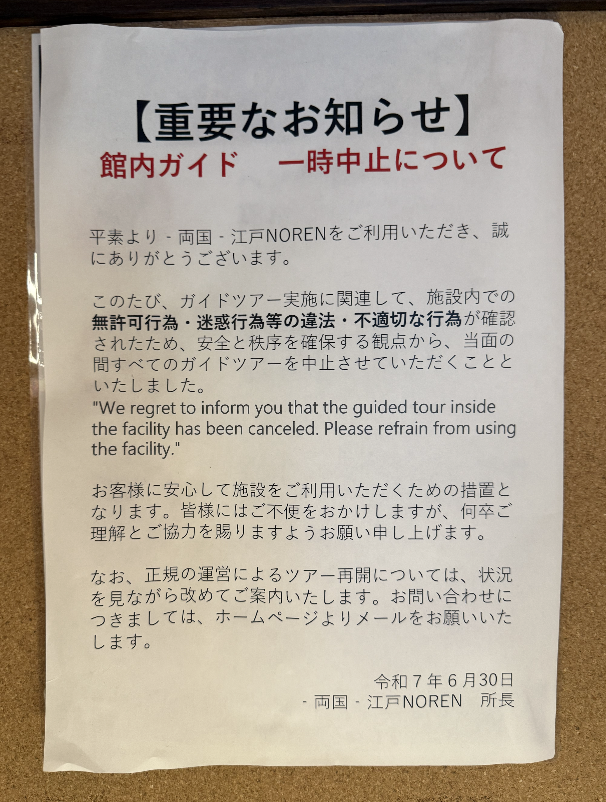
Meanwhile, during the visit of the Ryogoku area, notices and signs posted at the information desk inside Edo NOREN caught our attention, stating “Temporary Suspension of Facility Guides.” Upon inquiring about the reason, we learned that so-called freelance foreign guides repeatedly brought large groups of tourists to the facility. After allowing them to view the sumo ring inside, the visitors would linger for extended periods in front of shops effectively blocking their entrances. The tourists would then leave the facility without making any purchases. For a commercial facility, this situation—where visitors block pathways without making purchases—was difficult to handle and had become an operational challenge.
For regional cultural hubs to sustainably continue functioning, an appropriate balance between visitor behavior and local management policies is essential. This case study clearly illustrates the “struggles of the host side” and the “impact of how information is conveyed” that lie behind the tourism industry. For JIIA, it served as an opportunity to reaffirm the importance of disseminating accurate and appropriate information, thereby contributing to the creation of an environment where regions, businesses, and visitors can mutually respect one another.